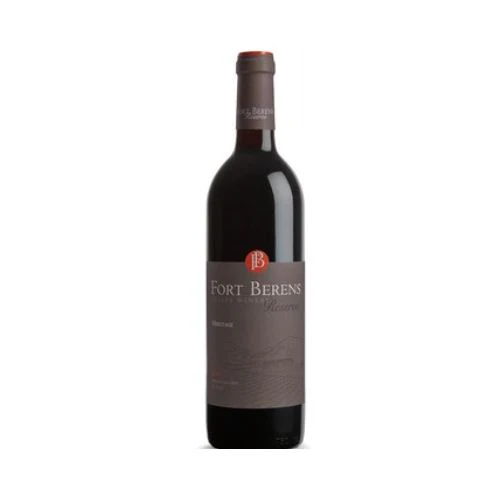
Fort Berens Estate Winery - Reserve Meritage 2021
Fort Berens Estate Winery is the culmination of a dream by Rolf de Bruin and Heleen Pannekoek that started in 2005 and took shape with their move with their family to Lilooet, British Columbia in 2009. Partnering with a team of BC investors, they were able to buy a 65-acre property, build a winery, and develop Fort Berens into what it is today.
The soils at Fort Berens are a result of deposits made during the last ice-age from about 100,000 years ago through about 10,000 years ago, at a time when glaciers dominated the valley. The Fraser River bench is a composite of gravely soil, loam, river rock and sand, with excellent drainage and rather poor organic material content–a great combination for vines, which like to work hard to produce excellent quality fruit.
Summers are hot and dry with cooler nights, which helps bring out acidity in their wines. More importantly, the location of the land benefits from additional sunlight from mid-September through early November, extending the growing season and ensuring ripe fruit.
Fort Berens is committed to sustainable agriculture using primarily natural products and practices to grow and support their grapes. Just as important, the vineyard is surrounding by a large variety of native plants, with the goal of attracting local birds and insects, and thus support the biodiversity of the region.
Fort Berens aim to produce wines that are clean and fresh. Wines that have old world elegance blended with the fruit forward styles consistent with new world wines. Generally, their red wines are cellared one year in French and American oak barrels and then aged 12 months in bottle prior to release. Wines are generally released so they are ready to drink or further cellared for an additional 4-8 years. They strive to produce white wines that are fresh while reflecting good acidity that is retained through our relatively cool nights. Generally, the whites are dry and fruit forward. Their Riesling is off-dry with tropical notes. It has evolved very consistently over the last three years, which suggests the potential for aging for those that seek a more mature Riesling.
Original: $34.35
-70%$34.35
$10.30Fort Berens Estate Winery - Reserve Meritage 2021
Fort Berens Estate Winery is the culmination of a dream by Rolf de Bruin and Heleen Pannekoek that started in 2005 and took shape with their move with their family to Lilooet, British Columbia in 2009. Partnering with a team of BC investors, they were able to buy a 65-acre property, build a winery, and develop Fort Berens into what it is today.
The soils at Fort Berens are a result of deposits made during the last ice-age from about 100,000 years ago through about 10,000 years ago, at a time when glaciers dominated the valley. The Fraser River bench is a composite of gravely soil, loam, river rock and sand, with excellent drainage and rather poor organic material content–a great combination for vines, which like to work hard to produce excellent quality fruit.
Summers are hot and dry with cooler nights, which helps bring out acidity in their wines. More importantly, the location of the land benefits from additional sunlight from mid-September through early November, extending the growing season and ensuring ripe fruit.
Fort Berens is committed to sustainable agriculture using primarily natural products and practices to grow and support their grapes. Just as important, the vineyard is surrounding by a large variety of native plants, with the goal of attracting local birds and insects, and thus support the biodiversity of the region.
Fort Berens aim to produce wines that are clean and fresh. Wines that have old world elegance blended with the fruit forward styles consistent with new world wines. Generally, their red wines are cellared one year in French and American oak barrels and then aged 12 months in bottle prior to release. Wines are generally released so they are ready to drink or further cellared for an additional 4-8 years. They strive to produce white wines that are fresh while reflecting good acidity that is retained through our relatively cool nights. Generally, the whites are dry and fruit forward. Their Riesling is off-dry with tropical notes. It has evolved very consistently over the last three years, which suggests the potential for aging for those that seek a more mature Riesling.
Product Information
Product Information
Shipping & Returns
Shipping & Returns
Description
Fort Berens Estate Winery is the culmination of a dream by Rolf de Bruin and Heleen Pannekoek that started in 2005 and took shape with their move with their family to Lilooet, British Columbia in 2009. Partnering with a team of BC investors, they were able to buy a 65-acre property, build a winery, and develop Fort Berens into what it is today.
The soils at Fort Berens are a result of deposits made during the last ice-age from about 100,000 years ago through about 10,000 years ago, at a time when glaciers dominated the valley. The Fraser River bench is a composite of gravely soil, loam, river rock and sand, with excellent drainage and rather poor organic material content–a great combination for vines, which like to work hard to produce excellent quality fruit.
Summers are hot and dry with cooler nights, which helps bring out acidity in their wines. More importantly, the location of the land benefits from additional sunlight from mid-September through early November, extending the growing season and ensuring ripe fruit.
Fort Berens is committed to sustainable agriculture using primarily natural products and practices to grow and support their grapes. Just as important, the vineyard is surrounding by a large variety of native plants, with the goal of attracting local birds and insects, and thus support the biodiversity of the region.
Fort Berens aim to produce wines that are clean and fresh. Wines that have old world elegance blended with the fruit forward styles consistent with new world wines. Generally, their red wines are cellared one year in French and American oak barrels and then aged 12 months in bottle prior to release. Wines are generally released so they are ready to drink or further cellared for an additional 4-8 years. They strive to produce white wines that are fresh while reflecting good acidity that is retained through our relatively cool nights. Generally, the whites are dry and fruit forward. Their Riesling is off-dry with tropical notes. It has evolved very consistently over the last three years, which suggests the potential for aging for those that seek a more mature Riesling.