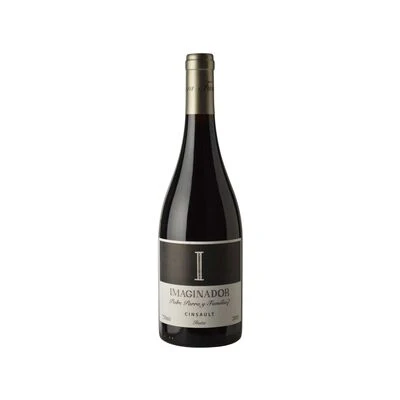
Parra y Familia - Imaginador Itata Cinsault 2019
Pedro Parra was born in Concepción, Chile, near Bio Bio and Itata, and he is raising his family there now. Pedro holds a PhD in terroir from the Paris Center of Agriculture, with six years of experience in French terroirs. As a highly respected consultant working in several countries and terroirs (Chile, Argentina, USA, Italy, Canada, France, Armenia), Pedro brings an open mind and vision to winemakers and viticulturists alike. Some of the wineries that have worked with Pedro are Comando G, Jean-Marc Roulot, Marco Marengo, Liger Belair, Altos las Hormigas, Chapter 24, and Zuccardi, to name a few.
But Pedro goes beyond terroir: he has an abiding interest in granitic soils, and within these, a particular kind of granite that provides in the wine what he calls “shambolic”, a chalk sensation of minerality, elegant with good mid palate, and finesse. More red than black in the fruit. To achieve this, Pedro searches for granites with minimum clay content and very low ferric oxidation–soils that are almost white and full of silt and quartz. These soils are rare.
Pedro Parra y Familia is the product of this obsession with granitic soils. The objective is simple: to make wines that Pedro likes for drinking with his wife and children. Wines that express the pure terroir of granite. After a life of travel, the place is simple as well: home. Pedro has chosen locations between Itata and Bío Bío were wine has been grown for a long time but don’t have great name recognition. Much as Galicia, Barolo, Morgon were places that were not well known outside from a relatively small circle.
The vineyards that source Pedro Parra y Familia have been worked in isolation for a century or more. No Bordeaux varieties invaded, no high yield production with irrigation; all of this kept the area pure and unique. In a geological sense, the area is defined by the Paleozoic era, 220-300 million year old, schist and granite soils. There are no vines planted on the schist due to planting of pine and eucalyptus during the Pinochet era, so the terroir for wine in Itata is defined by the granite. Within the granitic areas, Pedro prefers to focus on the sandy quartz granite soils, as they force roots deeper than clay soils and therefore express the terroir better. Weather is coastal, cool, and cloudy with enough rain to make dry farming possible. The two varieties most widely planted in Itata are Cinsault (45 to 70 year old vines) and País (60 to 120 year old vines). In the cellar, Pedro Parra y Familia use low intervention techniques along with wild yeast fermentation.
Original: $36.54
-70%$36.54
$10.96Parra y Familia - Imaginador Itata Cinsault 2019
Pedro Parra was born in Concepción, Chile, near Bio Bio and Itata, and he is raising his family there now. Pedro holds a PhD in terroir from the Paris Center of Agriculture, with six years of experience in French terroirs. As a highly respected consultant working in several countries and terroirs (Chile, Argentina, USA, Italy, Canada, France, Armenia), Pedro brings an open mind and vision to winemakers and viticulturists alike. Some of the wineries that have worked with Pedro are Comando G, Jean-Marc Roulot, Marco Marengo, Liger Belair, Altos las Hormigas, Chapter 24, and Zuccardi, to name a few.
But Pedro goes beyond terroir: he has an abiding interest in granitic soils, and within these, a particular kind of granite that provides in the wine what he calls “shambolic”, a chalk sensation of minerality, elegant with good mid palate, and finesse. More red than black in the fruit. To achieve this, Pedro searches for granites with minimum clay content and very low ferric oxidation–soils that are almost white and full of silt and quartz. These soils are rare.
Pedro Parra y Familia is the product of this obsession with granitic soils. The objective is simple: to make wines that Pedro likes for drinking with his wife and children. Wines that express the pure terroir of granite. After a life of travel, the place is simple as well: home. Pedro has chosen locations between Itata and Bío Bío were wine has been grown for a long time but don’t have great name recognition. Much as Galicia, Barolo, Morgon were places that were not well known outside from a relatively small circle.
The vineyards that source Pedro Parra y Familia have been worked in isolation for a century or more. No Bordeaux varieties invaded, no high yield production with irrigation; all of this kept the area pure and unique. In a geological sense, the area is defined by the Paleozoic era, 220-300 million year old, schist and granite soils. There are no vines planted on the schist due to planting of pine and eucalyptus during the Pinochet era, so the terroir for wine in Itata is defined by the granite. Within the granitic areas, Pedro prefers to focus on the sandy quartz granite soils, as they force roots deeper than clay soils and therefore express the terroir better. Weather is coastal, cool, and cloudy with enough rain to make dry farming possible. The two varieties most widely planted in Itata are Cinsault (45 to 70 year old vines) and País (60 to 120 year old vines). In the cellar, Pedro Parra y Familia use low intervention techniques along with wild yeast fermentation.
Product Information
Product Information
Shipping & Returns
Shipping & Returns
Description
Pedro Parra was born in Concepción, Chile, near Bio Bio and Itata, and he is raising his family there now. Pedro holds a PhD in terroir from the Paris Center of Agriculture, with six years of experience in French terroirs. As a highly respected consultant working in several countries and terroirs (Chile, Argentina, USA, Italy, Canada, France, Armenia), Pedro brings an open mind and vision to winemakers and viticulturists alike. Some of the wineries that have worked with Pedro are Comando G, Jean-Marc Roulot, Marco Marengo, Liger Belair, Altos las Hormigas, Chapter 24, and Zuccardi, to name a few.
But Pedro goes beyond terroir: he has an abiding interest in granitic soils, and within these, a particular kind of granite that provides in the wine what he calls “shambolic”, a chalk sensation of minerality, elegant with good mid palate, and finesse. More red than black in the fruit. To achieve this, Pedro searches for granites with minimum clay content and very low ferric oxidation–soils that are almost white and full of silt and quartz. These soils are rare.
Pedro Parra y Familia is the product of this obsession with granitic soils. The objective is simple: to make wines that Pedro likes for drinking with his wife and children. Wines that express the pure terroir of granite. After a life of travel, the place is simple as well: home. Pedro has chosen locations between Itata and Bío Bío were wine has been grown for a long time but don’t have great name recognition. Much as Galicia, Barolo, Morgon were places that were not well known outside from a relatively small circle.
The vineyards that source Pedro Parra y Familia have been worked in isolation for a century or more. No Bordeaux varieties invaded, no high yield production with irrigation; all of this kept the area pure and unique. In a geological sense, the area is defined by the Paleozoic era, 220-300 million year old, schist and granite soils. There are no vines planted on the schist due to planting of pine and eucalyptus during the Pinochet era, so the terroir for wine in Itata is defined by the granite. Within the granitic areas, Pedro prefers to focus on the sandy quartz granite soils, as they force roots deeper than clay soils and therefore express the terroir better. Weather is coastal, cool, and cloudy with enough rain to make dry farming possible. The two varieties most widely planted in Itata are Cinsault (45 to 70 year old vines) and País (60 to 120 year old vines). In the cellar, Pedro Parra y Familia use low intervention techniques along with wild yeast fermentation.