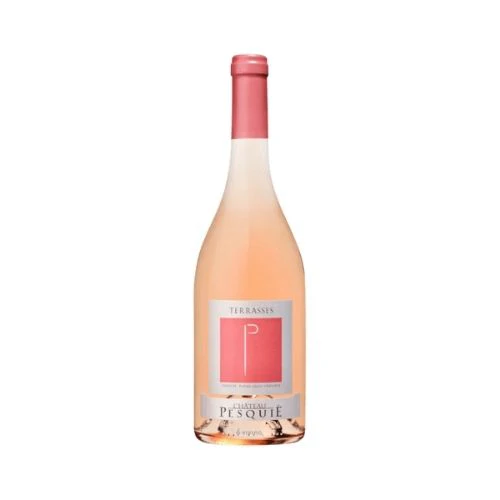
Château Pesquie - Terrasses Ventoux Rosé 2024
René & Odette Bastide bought Château Pesquié in the early 1970s, around the same time that the Côtes du Ventoux appellation was created (it dropped the “Côtes du” from 30th November 2008). They replanted much of the vineyards while still selling their grapes to the local cooperative. A decade or so later their daughter Edith and her husband Paul Chaudière joined the family firm and took up oenology seriously. Together they built a winery and started producing Château Pesquié wines from the 1990 vintage–including Quintessence which was (and remains) a statement of quality for the region. Edith and Paul Chaudière’s sons Alex and Fred became the next generation to join the family wine business, bringing additional enthusiasm and know-how.
The soils around Mt. Ventoux are rich in limestone and at higher elevation than in the Rhone Valley. These advantageous conditions, coupled with the older vines in the vineyard yield concentrated and complex fruit, which the folks at Château Pesquié vinify to create wines of great purity.
Château Pesquié comprises 100 hectares of vines. Only organic treatments and composts are used in the vineyard. Weed control is done by turning over the soil, and harvesting is done by hand. There are three main terroirs on the property: rocky limestone clay, red clay, and loamy gray clay. They grow Grenache, Syrah, Carignan, Cinsault, Mourvedre, Roussanne, Clairette, Viognier, Chardonnay, and Muscat. Their most common and diverse plantings are Syrah and Grenache, each chosen specifically for their soils and exposure. Fortunately, the Ventoux has a cooler micro-climate than the vineyards near the Rhône, so Fred and Alex can be guaranteed a longer and slower ripening of their fruit–especially important for these two varieties. The age of the vines ranges from 20 to well over 80 years old.
Hand harvesting is followed by fermentation in stainless steel tanks. Ageing is done in tank, concrete, or barrel depending on grape variety. Final blends are carefully made to capture the essence of the terroir and each cuvée: their line of Terrasses is forward and engaging and made for early drinking (though the reds can be aged for up to 10 years).
Original: $18.27
-70%$18.27
$5.48Château Pesquie - Terrasses Ventoux Rosé 2024
René & Odette Bastide bought Château Pesquié in the early 1970s, around the same time that the Côtes du Ventoux appellation was created (it dropped the “Côtes du” from 30th November 2008). They replanted much of the vineyards while still selling their grapes to the local cooperative. A decade or so later their daughter Edith and her husband Paul Chaudière joined the family firm and took up oenology seriously. Together they built a winery and started producing Château Pesquié wines from the 1990 vintage–including Quintessence which was (and remains) a statement of quality for the region. Edith and Paul Chaudière’s sons Alex and Fred became the next generation to join the family wine business, bringing additional enthusiasm and know-how.
The soils around Mt. Ventoux are rich in limestone and at higher elevation than in the Rhone Valley. These advantageous conditions, coupled with the older vines in the vineyard yield concentrated and complex fruit, which the folks at Château Pesquié vinify to create wines of great purity.
Château Pesquié comprises 100 hectares of vines. Only organic treatments and composts are used in the vineyard. Weed control is done by turning over the soil, and harvesting is done by hand. There are three main terroirs on the property: rocky limestone clay, red clay, and loamy gray clay. They grow Grenache, Syrah, Carignan, Cinsault, Mourvedre, Roussanne, Clairette, Viognier, Chardonnay, and Muscat. Their most common and diverse plantings are Syrah and Grenache, each chosen specifically for their soils and exposure. Fortunately, the Ventoux has a cooler micro-climate than the vineyards near the Rhône, so Fred and Alex can be guaranteed a longer and slower ripening of their fruit–especially important for these two varieties. The age of the vines ranges from 20 to well over 80 years old.
Hand harvesting is followed by fermentation in stainless steel tanks. Ageing is done in tank, concrete, or barrel depending on grape variety. Final blends are carefully made to capture the essence of the terroir and each cuvée: their line of Terrasses is forward and engaging and made for early drinking (though the reds can be aged for up to 10 years).
Product Information
Product Information
Shipping & Returns
Shipping & Returns
Description
René & Odette Bastide bought Château Pesquié in the early 1970s, around the same time that the Côtes du Ventoux appellation was created (it dropped the “Côtes du” from 30th November 2008). They replanted much of the vineyards while still selling their grapes to the local cooperative. A decade or so later their daughter Edith and her husband Paul Chaudière joined the family firm and took up oenology seriously. Together they built a winery and started producing Château Pesquié wines from the 1990 vintage–including Quintessence which was (and remains) a statement of quality for the region. Edith and Paul Chaudière’s sons Alex and Fred became the next generation to join the family wine business, bringing additional enthusiasm and know-how.
The soils around Mt. Ventoux are rich in limestone and at higher elevation than in the Rhone Valley. These advantageous conditions, coupled with the older vines in the vineyard yield concentrated and complex fruit, which the folks at Château Pesquié vinify to create wines of great purity.
Château Pesquié comprises 100 hectares of vines. Only organic treatments and composts are used in the vineyard. Weed control is done by turning over the soil, and harvesting is done by hand. There are three main terroirs on the property: rocky limestone clay, red clay, and loamy gray clay. They grow Grenache, Syrah, Carignan, Cinsault, Mourvedre, Roussanne, Clairette, Viognier, Chardonnay, and Muscat. Their most common and diverse plantings are Syrah and Grenache, each chosen specifically for their soils and exposure. Fortunately, the Ventoux has a cooler micro-climate than the vineyards near the Rhône, so Fred and Alex can be guaranteed a longer and slower ripening of their fruit–especially important for these two varieties. The age of the vines ranges from 20 to well over 80 years old.
Hand harvesting is followed by fermentation in stainless steel tanks. Ageing is done in tank, concrete, or barrel depending on grape variety. Final blends are carefully made to capture the essence of the terroir and each cuvée: their line of Terrasses is forward and engaging and made for early drinking (though the reds can be aged for up to 10 years).