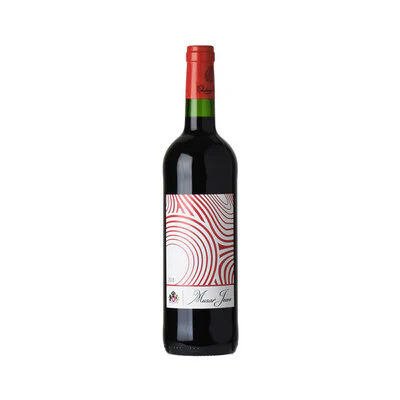
Château Musar - Jeune Red 2021
The Hochar (pronounced Hosh-ar) family arrive, it is said, in Lebanon in the 12th century as ‘prieur chevaliers’, or chivalrous knights, and stayed. In 1930, then 20-year-old Gaston Hochar founded Chateau Musar, inspired by his travels in Bordeaux but also by the rich heritage of winemaking in Lebanon, a heritage that dates back many thousands of years. As his son Segre Hochar was later to say of one of Lebanon’s many ancient monuments: “This is the only serious temple erected to Bacchus anywhere in the Roman world. And they put it here, in the Beka’a. Why? Because the Romans and Greeks, the Phoenicians and Minoans, and all peoples who came before them, all knew that the Beka’a is the spiritual home of wine.”
The Beka’a referred to is the valley of that name high in the heart of Lebanon. Musar’s vineyards are there, at the southern end of the valley about 30 kilometres south-east of the country’s capital Beirut.
In 1959 Gaston’s son Serge, a civil engineer who had studied oenology at Bordeaux University, took on the running of the business, demanding that his father step aside to let him put his new ideas and methods to the test. A decade later, Chateau Musar‘s wines were widely recognized for their idiosyncratic charm.
Today, after Serge’s tragic death in 2014, the Hochar family are still proudly at the helm of their iconic business. His two sons, Gaston and Marc, are involved in the business. Gaston now manages the day-to-day running of the winery, while Marc looks after its commercial aspects. Their vineyards in the Beka’a Valley cover 220 hectares and are planted with cabernet sauvignon, carignan, cinsault, grenache, syrah, mourvèdre, viognier, vermentino, chardonnay and native grapes obaideh and merwah. All are hand-picked by local Bedouins from August to October in a valley 1,000 metres above sea level, where the winters can be bitterly cold and snowy and the summers hot and dry. There are 300 days of sunshine a year and temperatures average 25°C across the year, making organic farming almost a default setting, and Musar is certified so. It is the first three grapes listed above that are the components of the flagship Chateau Musar red.
The winemaking methodology is, as Serge Hochar always intended, non-interventionist and natural, with ambient yeasts in the fermentation, a bare minimum of sulphur employed, and no fining or filtration of the finished Chateau Musar wine. It is absolutely the intention that every vintage be different, “to make wine on the edge” as Serge put it. This approach leads to wines that to some are infuriatingly inconsistent and to many others beguilingly so. As Serge once aptly put it: “I once produced a wine that was technically perfect, but it lacked the charms of imperfection.”
Château Musar - Jeune Red 2021
The Hochar (pronounced Hosh-ar) family arrive, it is said, in Lebanon in the 12th century as ‘prieur chevaliers’, or chivalrous knights, and stayed. In 1930, then 20-year-old Gaston Hochar founded Chateau Musar, inspired by his travels in Bordeaux but also by the rich heritage of winemaking in Lebanon, a heritage that dates back many thousands of years. As his son Segre Hochar was later to say of one of Lebanon’s many ancient monuments: “This is the only serious temple erected to Bacchus anywhere in the Roman world. And they put it here, in the Beka’a. Why? Because the Romans and Greeks, the Phoenicians and Minoans, and all peoples who came before them, all knew that the Beka’a is the spiritual home of wine.”
The Beka’a referred to is the valley of that name high in the heart of Lebanon. Musar’s vineyards are there, at the southern end of the valley about 30 kilometres south-east of the country’s capital Beirut.
In 1959 Gaston’s son Serge, a civil engineer who had studied oenology at Bordeaux University, took on the running of the business, demanding that his father step aside to let him put his new ideas and methods to the test. A decade later, Chateau Musar‘s wines were widely recognized for their idiosyncratic charm.
Today, after Serge’s tragic death in 2014, the Hochar family are still proudly at the helm of their iconic business. His two sons, Gaston and Marc, are involved in the business. Gaston now manages the day-to-day running of the winery, while Marc looks after its commercial aspects. Their vineyards in the Beka’a Valley cover 220 hectares and are planted with cabernet sauvignon, carignan, cinsault, grenache, syrah, mourvèdre, viognier, vermentino, chardonnay and native grapes obaideh and merwah. All are hand-picked by local Bedouins from August to October in a valley 1,000 metres above sea level, where the winters can be bitterly cold and snowy and the summers hot and dry. There are 300 days of sunshine a year and temperatures average 25°C across the year, making organic farming almost a default setting, and Musar is certified so. It is the first three grapes listed above that are the components of the flagship Chateau Musar red.
The winemaking methodology is, as Serge Hochar always intended, non-interventionist and natural, with ambient yeasts in the fermentation, a bare minimum of sulphur employed, and no fining or filtration of the finished Chateau Musar wine. It is absolutely the intention that every vintage be different, “to make wine on the edge” as Serge put it. This approach leads to wines that to some are infuriatingly inconsistent and to many others beguilingly so. As Serge once aptly put it: “I once produced a wine that was technically perfect, but it lacked the charms of imperfection.”
Product Information
Product Information
Shipping & Returns
Shipping & Returns
Description
The Hochar (pronounced Hosh-ar) family arrive, it is said, in Lebanon in the 12th century as ‘prieur chevaliers’, or chivalrous knights, and stayed. In 1930, then 20-year-old Gaston Hochar founded Chateau Musar, inspired by his travels in Bordeaux but also by the rich heritage of winemaking in Lebanon, a heritage that dates back many thousands of years. As his son Segre Hochar was later to say of one of Lebanon’s many ancient monuments: “This is the only serious temple erected to Bacchus anywhere in the Roman world. And they put it here, in the Beka’a. Why? Because the Romans and Greeks, the Phoenicians and Minoans, and all peoples who came before them, all knew that the Beka’a is the spiritual home of wine.”
The Beka’a referred to is the valley of that name high in the heart of Lebanon. Musar’s vineyards are there, at the southern end of the valley about 30 kilometres south-east of the country’s capital Beirut.
In 1959 Gaston’s son Serge, a civil engineer who had studied oenology at Bordeaux University, took on the running of the business, demanding that his father step aside to let him put his new ideas and methods to the test. A decade later, Chateau Musar‘s wines were widely recognized for their idiosyncratic charm.
Today, after Serge’s tragic death in 2014, the Hochar family are still proudly at the helm of their iconic business. His two sons, Gaston and Marc, are involved in the business. Gaston now manages the day-to-day running of the winery, while Marc looks after its commercial aspects. Their vineyards in the Beka’a Valley cover 220 hectares and are planted with cabernet sauvignon, carignan, cinsault, grenache, syrah, mourvèdre, viognier, vermentino, chardonnay and native grapes obaideh and merwah. All are hand-picked by local Bedouins from August to October in a valley 1,000 metres above sea level, where the winters can be bitterly cold and snowy and the summers hot and dry. There are 300 days of sunshine a year and temperatures average 25°C across the year, making organic farming almost a default setting, and Musar is certified so. It is the first three grapes listed above that are the components of the flagship Chateau Musar red.
The winemaking methodology is, as Serge Hochar always intended, non-interventionist and natural, with ambient yeasts in the fermentation, a bare minimum of sulphur employed, and no fining or filtration of the finished Chateau Musar wine. It is absolutely the intention that every vintage be different, “to make wine on the edge” as Serge put it. This approach leads to wines that to some are infuriatingly inconsistent and to many others beguilingly so. As Serge once aptly put it: “I once produced a wine that was technically perfect, but it lacked the charms of imperfection.”